

Monica Lewinsky’s is one of the most globally recognizable names of the past three decades-though for many years, she wasn’t in control of her own story. The world first met her through an explosive political scandal-one that dominated headlines and changed the course of American culture. But the Monica Lewinsky the world sees today is not defined by the past.
She reclaimed her narrative, rebuilt her identity, and emerged to be one of the most important voices in conversations about digital culture, public shaming, and online harassment. In a world where one moment on social media can make or break a person, Monica’s story is more poignant than ever.
That she went from being the object of merciless media persecution to a reflective proponent of compassion and online ethics is a testament to extraordinary resilience-and shines an important light on how we communicate in the digital era.
Rethinking Monica Lewinsky’s Legacy
For most people, the name Monica Lewinsky brings instant images of the 1998 scandal that swept through Washington. What is often forgotten, though, is just how young she was at the time. The fallout she faced was unparalleled: she became one of the first people to be publicly shamed on a global scale in the early internet era. When online media was still nascent and social media did not exist yet, the relentlessness of the reporting was devastating.
History has, however, rewritten its tune. With the emergence of discourse on sexism, mental health, media ethics, and the power of the story, a new generation revisited Monica’s experience with empathy and understanding. Many view her not from the prism of scandal but as a trailblazer in any discussion of cyberbullying and the psychological impact of public humiliation.
The Turning Point: Stepping Back into the Spotlight
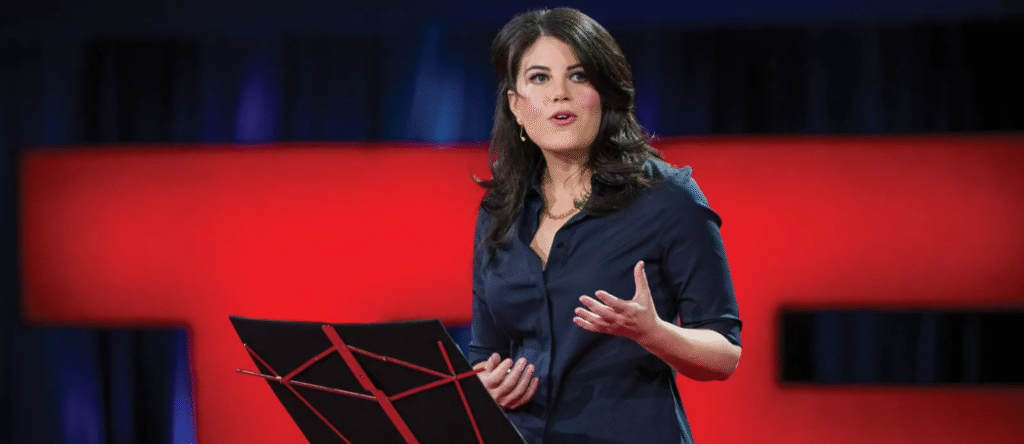
After years out of the spotlight, Monica Lewinsky emerged to become not the tabloid figure, but a thoughtful commentator on modern culture. Her shift back into the public sphere wasn’t fueled by drama or sensationalism. It was intentional, grounded, and deeply relevant to current issues. A major turning point was her TED Talk, which itself became a viral moment.
In it, she spoke candidly about being a target of worldwide ridicule and drew parallels to today’s online environment. She didn’t say it, but the implication was clear: shame can destroy lives, and the internet has made it alarmingly easy to dehumanize people.
Advocating for Digital Kindness
Her modern mission is to make digital environments healthier. She now leads the charge on anti-cyberbullying campaigns, trying to raise consciousness about how online cruelty affects real people.
Her writing and public speaking focused consistently on:
- The long-lasting trauma of digital harassment.
- The glamorization of scandal-driven culture
- The psychological consequences of mass shaming
- The importance of empathy in online interactions
As Monica points out, behind each trending controversy, each viral joke, and every heated comment is a human being. Her perspective is invaluable in a time when cancel culture, misinformation, and digital vigilantism are everyday things.
A Cultural Shift: Why Monica Lewinsky’s Story Matters Now
It was a decade ago when society finally began to pick apart the media narratives of the late 1990s and early 2000s with a much more critical eye. Pop culture has rethought how public figures—particularly young women—were treated via new documentaries, interviews, and cultural retrospectives. Everyone from political figures to celebrities is understood very differently in hindsight.
All of this has contributed to a very different perception of Monica Lewinsky among younger generations: to them, she’s not a scandal headline but the person who lived through something that would have destroyed most human beings. In large part, her openness to public introspection, challenging toxic norms, and extending an identity beyond labels has created a voice worthy of consideration for today’s conversations on power, gender, and identity.

The Role of Media and the Birth of the Digital Mob
Monica’s experience sits at the crossroads of traditional media and the rise of the internet. She has frequently been referred to as the “patient zero” of online shaming-not by choice, but because her story broke at a moment when digital culture was just beginning to reshape public discourse.
Today, viral scandals play out by the minute. A single news cycle now can change people’s lives forever. The lessons from Monica’s story provide context to the way we talk about public accountability, privacy, and the ethics of reporting. Her perspective reminds us that beyond every trending hashtag and scandal-driven headline is a person dealing with the aftermath.
A Parallel Story: Jessica Simpson and Media Reinvention
While Monica Lewinsky’s story is singular, her journey shares similarities with other women who faced public scrutiny—among them Jessica Simpson. Known first as a pop star and then as a reality TV personality, Jessica also experienced the pressures of being scrutinized in the public eye.
Over time, she took her narrative back via writing, entrepreneurship, and candid discussions about her personal struggles. Both Monica and Jessica represent a broader cultural shift: women reclaiming their stories after decades of being defined by others. Their stories show it is possible to reclaim one’s narrative, and in so doing, that can be powerful, transformational, and inspiring.
Reclaiming a New Purpose
Monica Lewinsky today is far removed from the young woman the world once judged. She is a writer, speaker, producer, and advocate pushing for cultural progress. Her voice has become a symbol of strength and self-definition. She has written for major publications, participated in multiple documentaries about media responsibility, and collaborative projects on trauma, redemption, and systemic ills in public discourse.
She does not shy away from painful memories if sharing them will help others. What makes her message resonate is the balance she strikes: acknowledging her past without being trapped by it, embracing vulnerability while promoting empowerment, and encouraging growth-not shame.
The Digital Age Needs Voices Like Hers
Everything, good and bad, gets amplified on the modern internet. Between the speed of information, the intensity of online debate, and the permanence of digital footprints, the human cost of digital behavior is easily forgotten.
But it is advocacy like Lewinsky’s that reminds us:
- Accountability can be combined with empathy.
- Public narratives are not always fair or accurate.
- Shaming does not produce meaningful change.
- Everyone has the right to evolve.
Her story testifies to resilience after unimaginable challenges. But much more, it serves as proof that one person’s story can light up a global conversation on compassion and responsibility.
Conclusion
A Story of Strength, Reinvention, and Influence Monica Lewinsky’s transformation is but a testament to the power of voice reclamation. She has transformed her experience, once a source of embarrassment and trauma, into a platform for advocacy, education, and cultural transformation. Her role in modern discussions about cyberbullying, empathy, and public shaming has influenced countless people and reshaped how we examine media narratives today.
As society becomes more aware of the impact of online behavior, her message grows more meaningful. Monica Lewinsky is no longer a symbol of scandal but a symbol of survival, transparency, and empowerment. She’s a guidepost for a digital era in desperate need of compassion, a reminder that every voice has the right to be heard in its own words.