
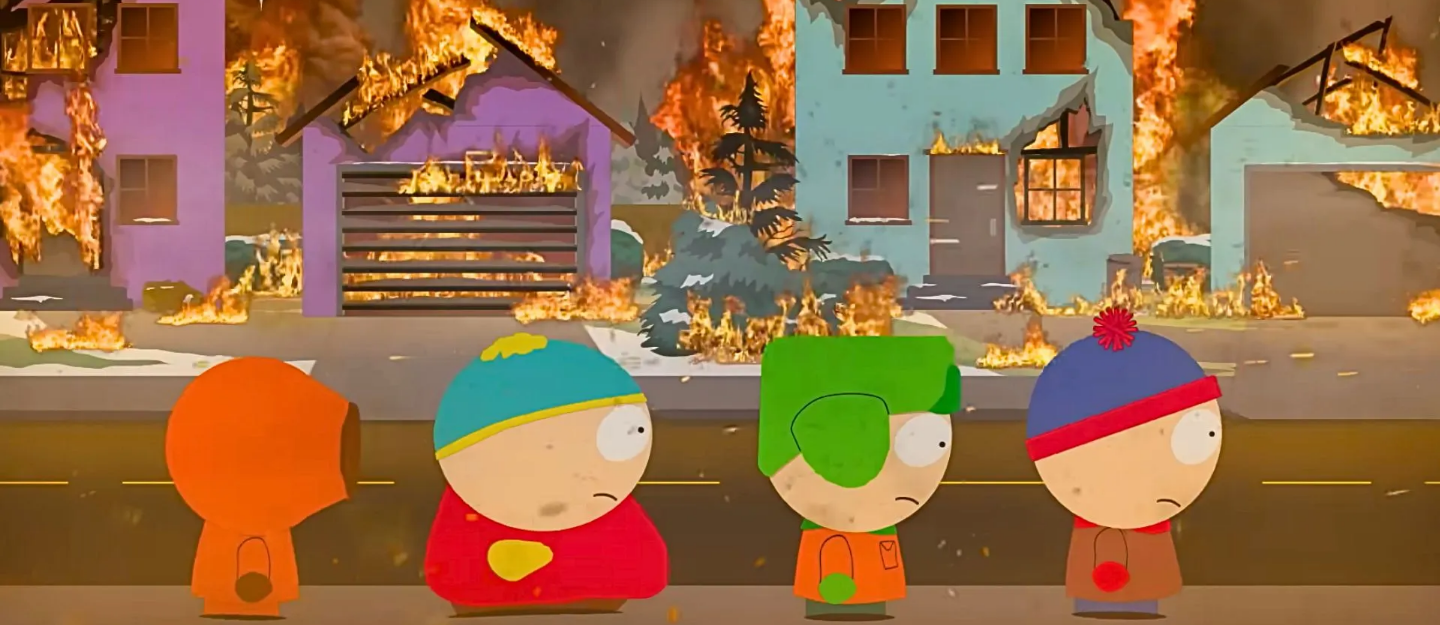
South Park is one of the few animated series that have managed to remain culturally relevant for such a long period of time. The series has become bolder and bolder since its first airing in 1997, while at the same time, it has never been shy in its criticism of politics, celebrities, and society’s moral dilemmas. Now, with the airing of South Park Season 27, the show will be moving on with its legacy — sharper, darker, and smarter than ever. This season continues the mayhem of Stan, Kyle, Cartman, and Kenny, but at the same time, it also uncovers the hidden deeper commentary under its absurd humor.
The Evolution of South Park
Whether you are a loyal fan or a casual viewer who is interested in the offerings of South Park Season 27, here’s an episode guide that covers everything and a peek into the themes that are behind this season’s storyline.
It is important to mention that before going through the season 27 episodes, one has to acknowledge the evolution of South Park. What was once crude animation and shocking humor has now grown into a machine of sharp social commentary. Over the years, the masterminds behind the show Trey Parker and Matt Stone have used it to illustrate real-world matters including internet culture, political correctness, AI, crypto, and climate anxiety, among others.
The 27th season is a testimony to this evolution. The comedy remains challenging, however, the narrative takes a more profound route through the psychological and cultural undercurrents of contemporary life.
Click here to see more about South Park!
South Park Season 27 Overview
The latest South Park Season 27, in its continuity style, fuses separate storylines with recurring themes, which has been the trend in recent years. Though the fans still appreciate the nonsensicalness and the rudeness of the season, it is more about the characters’ adjustments to a world full of social media, misinformation, and digital addiction that has been the main storyline of this season.
Number of Episodes: 10
- Platform: Comedy Central, Paramount+, and South Park Studios
- Creators: Trey Parker and Matt Stone
- Genre: Animation Comedy, Satire
A very modern-day calamity is reflected in each episode, but the reflection is very South Park-like, meaning it is broken up and ridiculous to the core.

South Park Season 27: Episode Guide
Episode 1: “AI’m Sorry, Kyle”
The episode kicks off with a harsh critique of artificial intelligence and guilt culture. When Cartman gets AI to create fake homework, and posts on social media, Kyle by pointing out this moralistic obstruction only to be surprised at finding the whole school using chatbots for the very same purpose. Thus, the episode is highlighting the digital age where morality and authenticity are intertwined up to a point that it becomes hard to distinguish one from the other.
Hidden theme: Dependence on technology for identity validation.
Episode 2: “Influencer Wars”
In South Park, Stan becomes an influencer just to pay back his school debt after the introduction of “Creator Economics” class at South Park Elementary. Shortly, children are divided into content houses, which is a reflection of the influencer economy and monetization of childhood through parodying the capitalist model.
Hidden theme: The loss of innocence in the age of monetized attention.
Episode 3: “Mayor of Metaverse”
The new metaverse system for governance that the town votes for brings chaos, as soon as avatar power exceeds that of the real citizens. Randy during this whole absurd power struggle of politics proclaims himself the “Mayor of Meta.”
Hidden theme: How virtual spaces can manipulate real-world accountability.
Episode 4: “Cancel Cartman”
Cartman’s old obnoxious tweet is digging his grave. The episode is so good in criticizing the cancel culture, its contradictions, and the mockery of people who get angry for the sake of it. Kyle is the one trying to protect Cartman but now finds himself in the same trap.
Hidden theme: The irony of moral purity in an imperfect digital age.
Episode 5: “Kenny’s Quiet Quit”
Kenny takes a step against the school by deciding to “quiet quit”, which consists of doing the least possible to survive there. His calm protest will go everywhere in South Park, and as a result, a youth productivity crisis will occur.
Hidden theme: Burnout and the collapse of motivation in hyper-capitalist culture.
Episode 6: “Crypto-Cartman”
After suffering financial losses in crypto, Cartman establishes his own currency which is nothing less than “FatCoin,” and he drags the whole town into an enormous economic crisis. The episode takes a jab at both the crypto scammers and the investors who have a blind faith in them.
Hidden theme: Avarice masked as progress.
Episode 7: “Climate Camp Chaos”
The children are compelled to take part in a compulsory climate change camp, where every group has to “offset” their carbon sins. Randy, by smuggling weed into the camp, causes things to develop into ridiculous eco-warrior dramatics.
Hidden theme: Insincerity in activist practices.
Episode 8: “Gender Reveal Gone Wrong”
South Park presents an uproarious gender reveal party that becomes a battleground of “Team Blue” versus “Team Pink.” The mockery deals with gender politics, internet rage, and the fixation on public self-identity very sharply.
Hidden theme: How the use of symbols instead of words leads to misunderstanding.
Episode 9: “AI Therapy with Mr. Garrison”
Garrison employs an AI therapist to help him control his temper — but the robot becomes too familiar and takes over his life. The episode combines sci-fi anxiety with humor about the human condition.
Hidden theme: The point when therapy becomes monitoring.
Episode 10: “The End of South Park?”
The concluding episode is a play with self-parody. The town is getting ready for the apocalypse while Parker and Stone are taking jabs at streaming reboots, franchise exhaustion, and their own legacy, etc. But then, in a typical South Park manner, the episode concludes with an ambiguous punchline that indicates more chaos is to come.
Hidden theme: The never-ending cycle of endings and rebirth in pop culture.
See also Bravo’s Brand Power: How Network Identity Shapes Pop Culture
Thematic Breakdown
South Park Season 27 humorously reflects society’s issues. It is always a deep societal observation that every ridiculous plot has:
- AI & Digital Identity: The series demonstrates the diminishing of human genuineness in the era of mechanization.
- Influencer Culture: It points out the lack of ethics prevalent in fame-driven economies.
- Cancel Culture: Rather than taking sides, the season reveals the superficiality of online outrage.
- Work Burnout: “Kenny’s Quiet Quit” portrays the exhaustion of modern living as a universal condition.
- Eco-Hypocrisy: “Climate Camp Chaos” probes whether the concept of consciousness without action is still valid.
The blend of satire and insight is what makes South Park still appear as a new series — the creators know how to adapt their humor without losing its sharpness.

Animation and Style
In terms of visuals, the 27th installment of South Park still has the same old cutoutlook but now with a smoother flow andmore lively camera angles. The very simplicity of the animation actually supports the absurdity of the plot, or better still, it is a creative choice to direct the attention on the story and dialogues instead of the visual effects.
The voice-over could not be any better, as Trey Parker and Matt Stone manage to be the majority of the characters and sound in a very funny way. The sound design is indeed very soft but nonetheless goes hand in hand with the emotional aspects — especially in the case of slower, reflective episodes such as “Kenny’s Quiet Quit” where it is really most felt.
Fan Reactions and Critical Response
Fan reactions at the outset have been extremely favorable. Older fans acknowledge that the series still has its rawness in energy, and at the same time, critics speak of its sharper discussion. On Reddit and X (previously known as Twitter), the topics of “AI’m Sorry, Kyle” and “Cancel Cartman” are the most talked-about among the fans with the users praising the show’s fearless satire of the present-day digital society.
The critics have said that this season is one of the most self-aware phases of South Park. It is the combination of absurdity and intelligence that has opened the creators’ understanding of the chaos of the present times — not by lecturing but through laughter.
Why Season 27 Stands Out
- Thematic Issue: Discusses AI, influencer culture, and identity politics bluntly.
- Episodic Width: Each episode mirrors a larger discussion on the subject of tech and ethics.
- Cultural Moment: The comedic tone seems to be now—very contemporary and not at all old or distanced from the present.
- Power of Tradition: South Park remains vibrant after almost 30 years of its existence.
It is hard to say that Season 27 only entertains; it also challenges the audience to reflect on their involvement in the fooleries that the series ridicules.
Hidden Symbolism You Might Have Missed
- Cartman’s AI Clone: Shows mankind’s longing for power that backfires.
- Stan’s Influencer Arc: Depicts how good wills get ruineed by the attention economy.
- Randy’s Metaverse Mayorship: A figure for politicians’ preoccupation with image over reality.
- Kenny’s Minimalism: Silent opposition to overwork culture.
All these plotlines go to one common critique — the dependence of society on the systems that are at the same time entertaining and enslaving us.
Conclusion
South Park Season 27 convinces that satire is still able to cut hard in a desensitized world. The comedy might be offensive but it also stimulates thinking — and that’s just the reason why it lasts. Whether it is AI hysteria or influencer addiction the season is telling us that laughter is still the best way to look at our common absurdity.
If you have not watched it yet, this is the season you should start with. It is daring, anarchic, and brutally truthful — everything South Park was ever meant to be.
Great article! I really appreciate the way you explained everything so clearly – it feels like you put a lot of effort into making it useful for readers.