
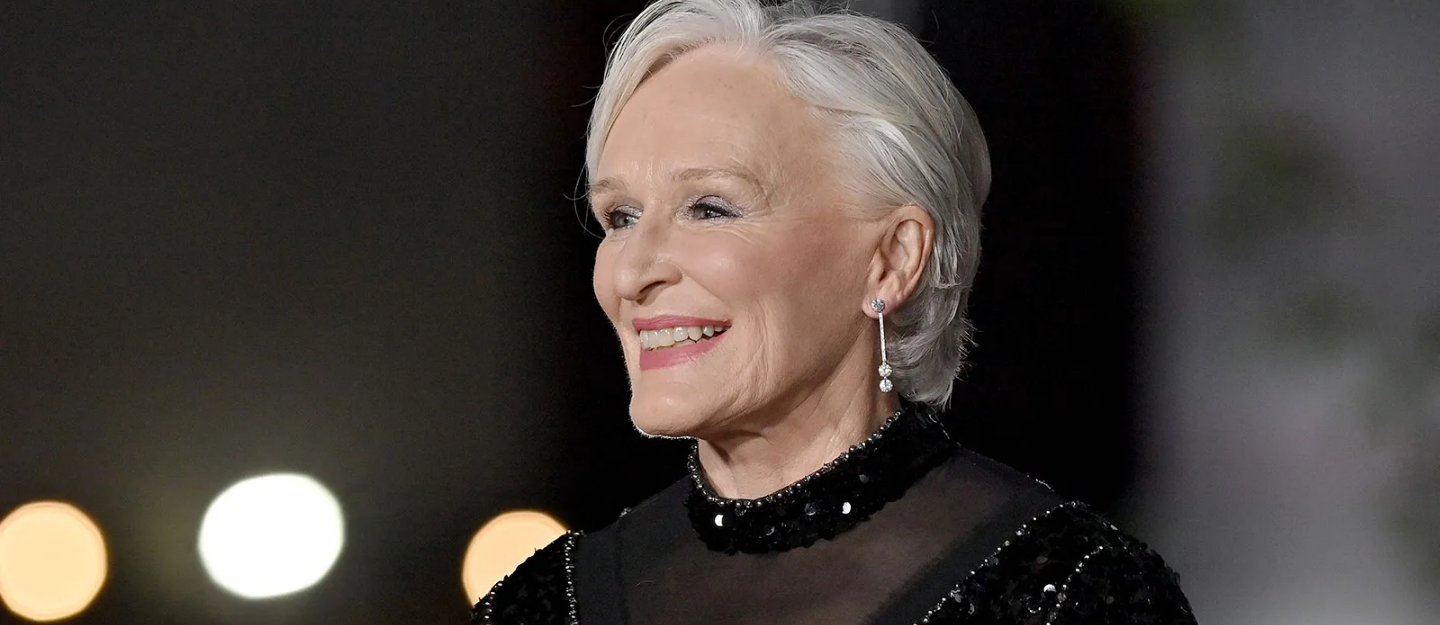
Few names command more respect and admiration in the entertainment industry than that of Glenn Close. With a depth of emotion, strength of presence, and devotion to telling stories, Glenn Close has forged a path unmatched in film, television, and theater. Versatility, precision, and an often fearless approach to each role have made her one of the most respected performers of her generation. This piece now takes a closer look at Glenn Close’s remarkable journey from her early beginnings to award-winning performances that have continued to inspire audiences and fellow actors alike, such as her contemporary Patrick Stewart.
Early Life and Passion for Performance
Glenn Close was born on March 19, 1947, in Greenwich, Connecticut. She did not have a typical childhood: for much of her childhood, her family lived abroad while her father performed his medical and humanitarian work in the Congo. These experiences broadened her worldview and instilled in her a deep empathy that would later fuel her acting career.
Back in the United States, Glenn attended the highly acclaimed Rosemary Hall, now known as Choate Rosemary Hall, and then went to the College of William & Mary to study drama and anthropology. It was here that she started to develop her love of performing, delving head-first into theater and developing those skills that would later define her.
The Stage: Where It All Began
Before her success in Hollywood, Glenn Close was a presence on the stage. During the 1970s, Close was an active participant in New York theater and earned great recognition for her performances in Love for Love and Barnum. Her innate charisma and emotional precision quickly made her a favorite of both the critics and theatergoers. Close’s Broadway work demonstrated her incredible range: She won Tonys for The Real Thing in 1984, Death and the Maiden in 1992 and Sunset Boulevard in 1995.
Her performance as Norma Desmond in Sunset Boulevard is still considered one of the finest stage performances ever – one that she will repeat in a movie version now in pre-production. For Glenn, the commitment to theater is about belief in the medium of live performance. For her, the stage isn’t just a way into film; it’s a bedrock that determined an acting philosophy: truth, vulnerability, precision.
Hollywood Breakthrough and Rise to Stardom
The film career of Glenn Close started much later compared to most of her contemporaries. Her first major role came in the year 1982 when she acted as Jenny Fields in The World According to Garp. She got an Academy Award nomination for Best Supporting Actress, which signaled the arrival of a major new talent in Hollywood. She then did a string of critically acclaimed performances in The Big Chill (1983) and The Natural (1984), both earning her an additional Oscar nomination.
By the mid-1980s, Close was considered one of the most respected actresses around because of her keen knack for imbuing each character with intelligence and depth. But it was Fatal Attraction that really changed everything for her in 1987. Her portrayal as Alex Forrest, a woman consumed by obsession, bequeathed one of cinema’s most iconic performances.
The film became wildly popular and provoked national discussions on relationships, gender roles, and mental health. Close’s performance was hauntingly layered and unforgettable; it earned her another Oscar nomination and secured her position as a Hollywood powerhouse.
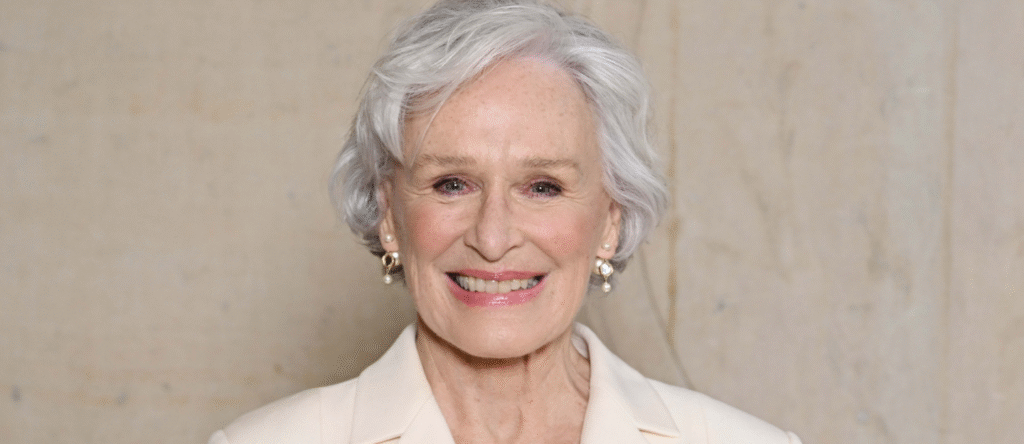
Exploring Complex Female Characters
One of the hallmarks of Glenn Close’s career is her ability to depict multidimensional women who are complex. She doesn’t play stereotypes; she plays people who are real, flawed, and fascinating. Then came her association with Dangerous Liaisons, 1988, where she played the scheming Marquise de Merteuil to perfection. The performance showcased her control and sophistication, which fetched her another Oscar nomination.
In 101 Dalmatians (1996) and its sequel, Close managed to bring comic brilliance into the role of Cruella de Vil, transforming a cartoon villain into an unforgettable live-action icon. Her flair, timing, and commitment to every detail made Cruella one of the most memorable characters in Disney’s modern filmography. Other notable roles include Albert Nobbs, in which she plays a woman masquerading as a man in 19th-century Ireland-a role that showcased her gutsy approach to storytelling and garnered her an Academy Award nomination for Best Actress.
Television Triumphs and Reinvention
The talent of Glenn Close transcends mediums. In the 2000s, she brought her commanding screen presence to television with stunning success. Her portrayal of high-powered attorney Patty Hewes in the FX legal thriller Damages (2007–2012) earned her two Primetime Emmy Awards and wide critical acclaim. The series became proof that Close could balance intelligence, ruthlessness, and vulnerability together to create one of the most mesmerizing female roles in the history of television. Having transitioned from film to television, it showed her adaptability to changing storytelling formats and pushed her to continue challenging herself as an artist.
Glenn Close and Patrick Stewart: United by a Love of the Craft
Both Glenn Close and Patrick Stewart have based their careers upon classical training and a deep respect for theater. Similar to Stewart, who emerged from the Royal Shakespeare Company, Close’s roots in live performance give authenticity and depth to her work on screen. Their paths converge, not only because of the values they share but also because of their commitment to telling human stories.
Both actors have tackled Shakespeare, explored moral ambiguity, and used their fame to advocate for mental health awareness and the arts. Patrick Stewart has spoken during interviews about the value of vulnerability in acting-a philosophy which Glenn Close endorses with each role. And their mutual belief that storytelling has the ability to change hearts and minds cements them among the finest actors of their generation.
Awards and Recognition
Glenn Close’s career is decorated with a myriad of honors that reflect her extraordinary impact on the entertainment industry. She has been nominated for eight Academy Awards and has won three Tony Awards, three Golden Globes, three Primetime Emmy Awards, and many more, including Screen Actors Guild honors.
Though she has famously never taken home an Oscar despite multiple nominations, her career is widely considered one of the most consistently brilliant in film history. Critics and audiences alike recognize that her influence goes beyond trophies; it’s about artistic truth and the moving of audiences across generations.
Personal Life and Advocacy
But beyond her performances, Glenn Close is a passionate advocate for mental health awareness. Inspired by her own family’s experiences, she co-founded Bring Change to Mind, a nonprofit dedicated to ending the stigma around mental illness. Her work has sparked national conversations and provided crucial support for countless individuals and families. Close has spoken of being an advocate for equality, women’s rights, and encouraging the next generation of artists. She believes in the transformative power of storytelling: that art can heal, unite, and inspire.
Legacy and Lasting Influence
Glenn Close is more than the sum of her awards and an accumulation of iconic roles; she has been defined, above all, by an implacable commitment to the truth. On stage, in film, or on television, her character always will bear a touch of humanity. Her influence extends to a new wave of actors who name her as an inspiration.
See Also Mark Kerr’s Inspiring Comeback Story in Combat Sports
From the commanding presence of Fatal Attraction to the poignant vulnerability in The Wife (2017), Close has continuously pushed the definition of what it means to be a leading woman in Hollywood. Even in her seventies, she continues to take on challenging roles, proving that great artistry has no age limit. Glenn Close remains a beacon of integrity and creativity-an artist who reminds us that true greatness lies in never ceasing to evolve.
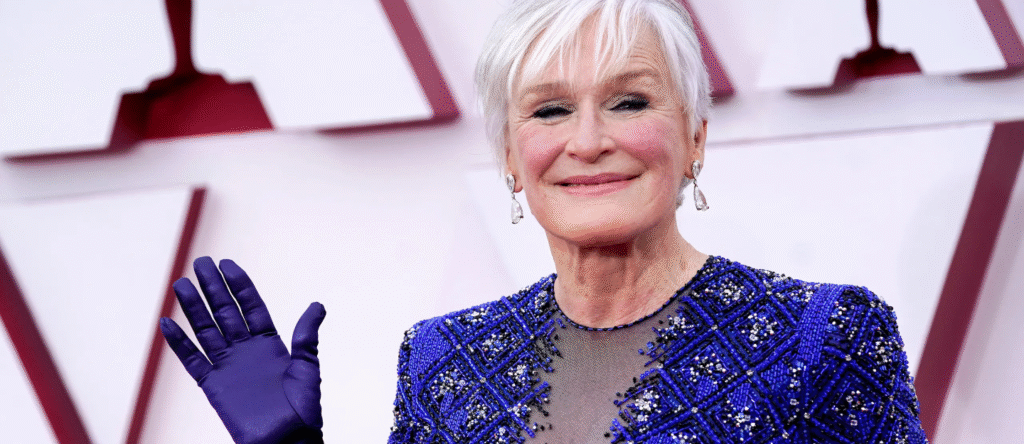
Conclusion
Glenn Close’s story is about commitment, reinvention, and genius. Her path from the theater stage to the big screen, her bold portrayal of difficult women, and her advocacy beyond acting paint the picture of a real artist. Like Patrick Stewart, she is an icon of longevity, mastery, and depth — proof that great acting is timeless. Glenn Close’s life and work continue to inspire, challenge, and elevate the art of performance. With each new role, she does not merely act; she transforms, reminding us why we fall in love with storytelling in the first place.