
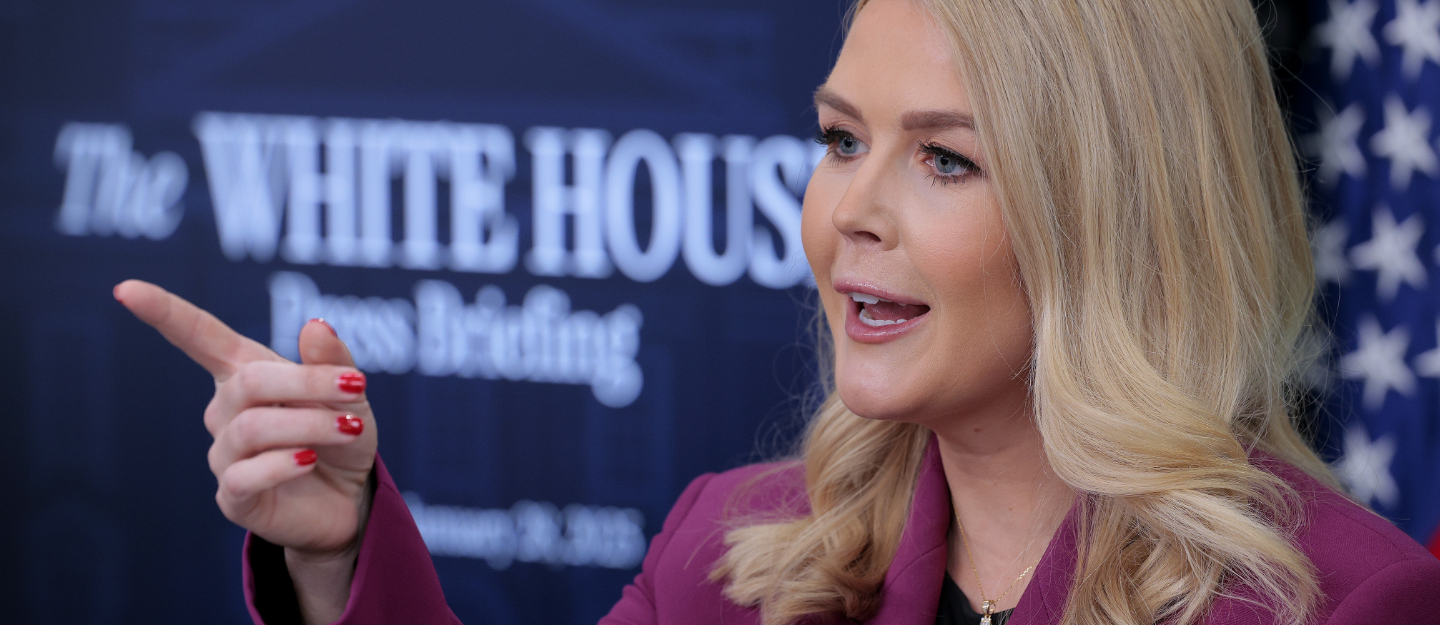
In the case of political operatives stepping into the limelight, the route of Karoline Leavitt is one of the most spectacular ones. She has gone through a lot from a mere intern at college to a position of the youngest White House Press Secretary. Her journey is a reflection of the present-day American political communication world.
Besides the public persona that she has created for herself, she has been a recipient of both compliments and serious criticisms, for example, from comedian Jon Stewart. In this piece, we will examine her past, her rise, the controversies that surrounded her, and the implications of her emergence on the media-political landscape.
Early Life and Influences
The upbringing of Karoline Leavitt was in a religious family, in Atkinson, New Hampshire, which instilled in her a mixture of faith, ambition, and communication. She went to the college of Saint Anselm, where she majored in politics and communications, along with co-founding a broadcasting club, being a writer for the students’ newspaper, and refining her public-speaking presentation skills.
It was already decided that she would be in political communication, since the beginning of Karoline Leavitt’s career; after an internship in the White House Office of Presidential Correspondence she soon moved to the Trump administration’s communications. Her early career indicates the way a young communicator can link formal education with hands-on internships to quickly rise in a polarized political environment—especially if one is connected to a major political figure.
Rise in Political Communications
Karoline Leavitt had already been working in the White House correspondence office as a full-time employee by the year 2019 and then she served as an assistant press secretary during the first term of President Donald Trump. After this, she worked for Communications Director for Elise Stefanik in Congress and then went on to be the national press secretary for Trump’s 2024 campaign. In November 2024, Trump appointed her as White House Press Secretary; she officially took over the position in January 2025 at the young age of 27, thus becoming the youngest ever to hold this post.
Her rise to prominence indicates some main characteristics of her political persona:
- Her alignment with the dominant political brand: Karoline Leavitt has always been part of the Trump communications team.
- She was able to show herself as media-savvy: Karoline Leavitt took advantage of the modern media landscape – social media, digital outlets, and traditional press briefings.
- She was a generational marker: Being a Gen Z figure in high political communications office, she is representing a younger group than most who are behind the podiums of Washington.
Public Profile & Style
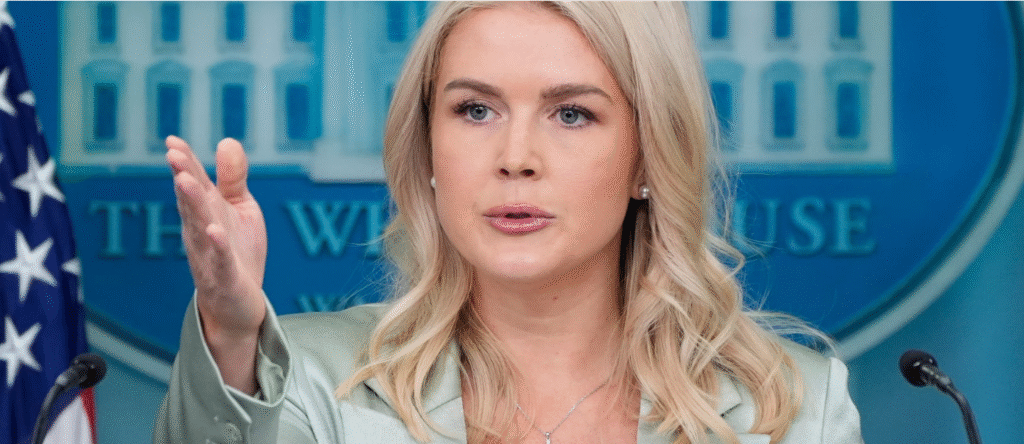
Karoline Leavitt’s communication style is usually characterized as assertive, ready for the camera, and unreservedly partisan. A certain profile states that she “is a major factor in the transformation of the press milieu… giving priority to the friendly right-wing and new-media voices over the legacy ones.” She has also indicated the significance of her religious belief to her role and on the basis of this committed to being the ‘light’ in such a ‘dark’ area saying, “my faith is incredibly important to me…being in a role that is very taxing and at times contentious.”
Her father’s working-class background and family business roots frequently feature in her narrative of rising up through grit and communication skills. To conclude, Karoline Leavitt’s public persona is made up of the old-fashioned conservative markers (faith, patriotism, small-town upbringing) and the new media posture (millennial/Gen Z savvy, open hostile press style, digital engagement).
Controversies and Public Scrutiny
No high-profile communicator dodges scrutiny, and Leavitt is the same. A few of the main controversies are:
Social Media & Campaign Debt
Her 2022 congressional campaign (for New Hampshire’s 1st district) uncovered later debts of more than $300,000 in unpaid obligations and allegedly illegal contributions. These financial disclosures have raised questions about transparency and campaign ethics.
The Jon Stewart Moment
One of the more visible and media-friendly moments was when host Jon Stewart criticized her on his show, referring to her significant crucifix necklace and pattern of public statements. Stewart said, “I think the more she lies, the bigger her cross gets. Is that possible? It’s like some sort of weird Pinocchio cross.”
After the segment, Karoline Leavitt was spotted at a briefing without her cross necklace, leading to media conjecture about image control. This episode illustrates that modern political communicators are not only judged by the substance but also by the symbolic visuals and social-media viral moments.
Media Relations & Critique
Critics say that the press briefing room dynamics have changed during Karoline Leavitt’s time—the old media press claims to have less access, while new media channels are invited earlier. Some people argue that her role is indicative of the “Trump-style” communications strategy: rhetorical aggressiveness, strong media branding, and the emphasis on a base rather than neutral press coverage.
Why Her Rise Matters
What makes Karoline Leavitt’s path a significant one to follow? Here are some points to consider:
- Changing Communications Paradigm: The transition from intern to national-communications chief in just a couple of years demonstrates the rapid pace and changing nature of political communications, especially with a strong brand like Trumpism.
- Media & Symbolism: The Jon Stewart episode highlights the significant role that optics, branding, symbolism, and viral moments play in politics today. A press secretary is not merely a spokesperson — she is part of a media product.
- Generational Shift: Leavitt, who was 27 at the time of her appointment, introduces a youthful generation’s perspective into a predominantly older communications hierarchy. This is a clear sign that political parties are focusing on Gen Z and younger millennial faces as their representatives.
- Polarisation & Messaging: Her loyalty to a certain political brand (Trump) and her preference for an aggressive media stance point to the generalised polarised messaging that characterizes the American political scene — where communications are as much about energising supporters as they are about informing the wider public.
- Ethics, Transparency & Campaign Finance: The campaign-debt controversy has been a reminder that visibility of the role also increases the risks involved — including the issues of funding, accountability, and public perception.
What Comes Next?
Looking to the future, a number of scenarios and questions that are prone to happen and politically communications will be impacted are Karoline Leavitt’s future and her role in shaping political communications:
- Would the press briefing room culture be entirely different under her leadership, though? Is it going to be, for instance, fewer traditional briefings, more digital statements, or a shift in who gets access?
- How she is going to balance the challenging hardcore partisan messaging and the institutional role of press secretary (which requires some level of credibility with the broad public) to perfection?
- How she is going to handle the situation in which her campaign debt and past controversies weaken the transparency and ethics issues as her credibility both in Washington and among the public?
- As the change in media consumption continues (TikTok, Instagram, podcasts), will she continue to innovate White House communications strategy to younger audiences or adapt to that Tik Tok age being the one mainly the communications department will talk about?
- If the winds of politics change (meaning different leadership or party control) in the future, will Karoline Leavitt stay at the center of Republican communications or is her path going to be into a media role, consultancy, or campaign leadership?
What the Jon Stewart Episode Tells Us about Political Communications
The instant when Jon Stewart turned on Karoline Leavitt gave not only viral fodder but also showed important lessons for the politics students of today to learn from.
- The visuals have their impact. The crucifix necklace was a sign and a matter of discussion even more than her many words.
- Media popularity is a double-sided sword. Being prepared for media could win one exposure but could also draw or be subjected to memes, jokes, and criticisms (sometimes even one’s self).
- The speed and virality are stunning. Such instances can be circulating on TikTok, Reddit, Instagram, and television within hours, thus swallowing or amplifying the message of the communicator.
- The framing plays a role. Stewart’s framing (“Pinocchio cross”) shifted the narrative, to an extent, moving it from policy to image.
For Karoline Leavitt, being able to navigate such moments means to mix knowledge, self-control, and flexibility — the communicator of today must be equally ready for Twitter blunders, TikTok clips, and press briefings.
Final Thoughts
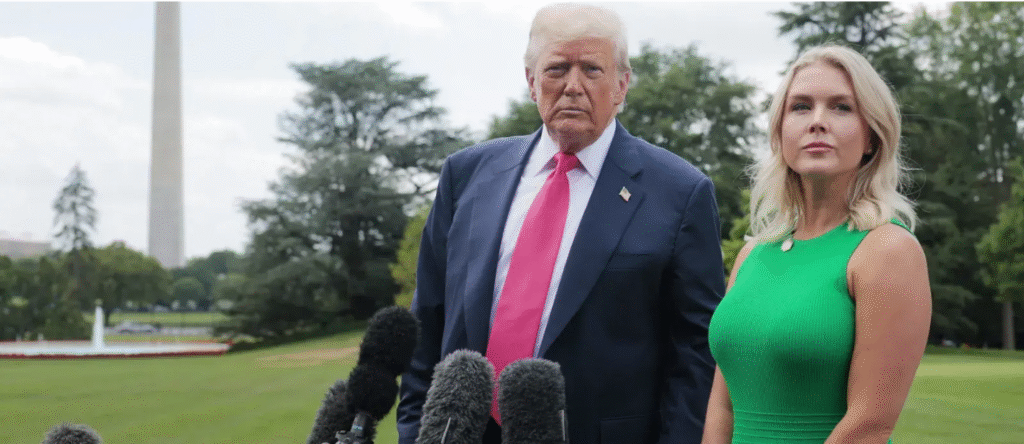
Karoline Leavitt’s story is very interesting for anyone who cares about politics, media, and the influence of communication professionals in public talk. Her journey from New Hampshire to the West Wing is a ticking example of how ambition, media literacy, and the right political branding can yield quick ascent. However, her path also brings out the newer demands expected from public figures: image control, readiness for viral moments, and slipping through constantly changing media environments.